
Home Insurance

Here at RC Insurance Brokers we offer Homeowners insurance and Renters insurance. We have an array of carriers to pick from. Whether its a Renters or Home Owners policy, it may cover burglary, theft, damage due to fire and other perils.
What is homeowners insurance?
Homeowners insurance is an agreement between you and your insurance company that can cover your house, unattached structures, lawsuits against you, and more. When you buy homeowners insurance, you’re buying “coverages,” which are essentially things your insurer (the insurance company) agrees to pay for.
It’s basically like paying a little now to avoid potentially paying a lot later.
How does homeowners insurance work?
When you purchase insurance, your insurer or agent will ask simple questions about you and your home, and then you’ll have some options when picking coverages. Several of these factors can impact your price. Generally, more coverage means a higher price. Then if your house is damaged or something else happens, you can file a “claim” with your insurance company. That’s an insurance term for asking for payment based on what’s protected on your policy. If it’s covered, they’ll pay for the damages or losses up to your specified coverage limits.
Do I need homeowners insurance?
Homeowners insurance is not legally required. But, if you have (or are getting) a mortgage, your lender will likely require you to purchase insurance to protect their investment. In fact, we can will help coordinate details with your lender.
How to buy homeowners insurance
Here at RC Insurance Brokers offer various ways to purchase homeowners insurance. Here’s the steps that are required:
- Get a quote
- Approve the quote
- Signature of Approval and depending on your billing method, the mortgage company and us will work out the details.
What to know when filing Home Insurance Claim

After a home burglary, safety is the biggest concern. When it is safe to enter, you will need to file your a claim with your Insurance carrier. After a fire loss it will be important to be detail to provide losses to your insurance company.
Four Steps to Home Inventory Checklist:
- Do a walk through, make a detail list of inventory in your home. Take your smartphone as you walk through your home and describe the items you see. On your list be as detailed as possible, make, models, quantities, and value of the items. Be sure to open drawers, closets and bags.
- Keep your list in a safe place that a fire or thief can’t get to it. Create a list and store it in your cloud, such as Google, One Drive, or phone storage. Upload your videos and photos to your Cloud. Be sure to share the file with your spouse, in case you forget your password.
- Continue to update your Inventory list each time to make a significant purchase. Be sure to add detail information on your list while its still fresh in you mind. Be sure to take a picture of the receipt and upload to the cloud. This is also a good time to delete items that you have replaced or no longer own
- Consider Value items and be detailed. Valued items such as Jewelry, Art, and Collectibles may have an increase in value since its first purchased. Firearms, make sure you have Serial numbers and pictures of the Firearms that are stolen. Be sure to report them stolen to local law enforcement. Make sure you have adequate insurance coverage for these items as they may need to have additional coverages.
To Learn more about how RC Insurance can help you protect your Home and belongings, checkout our Home Insurance page and be sure to contact us for a consultation.
SR-22 Insurance
What is an SR-22 and what will it cover?
An SR-22 is “Certificate of Financial responsibility” insurance. It covers property damage and liability arising from an accident in which the insured is involved. In the state of California, you will need this up to 3 years. Below are some of the main reasons you may need an SR-22:
- DUI or DWI conviction
- Driving without enough insurance
- Too many at-fault accidents or violations
- Repeat offenses in a short time frame (for example, three or more speeding tickets within six months)
- Not paying court-ordered child support
- Hardship license (issued for temporary driving needs, normally to and from work, because your license has been suspended or revoked)There is also a slightly different but very similar SR-22, NON-Owner Policy.
There is also a slightly different but very similar SR-22, NON-Owner Policy.
If you don’t own a vehicle but are required to have an SR-22 for any of the reason listed above this is also known as “Non- Owner operator policy.” This will cover liability coverages based on the state minimum.
If you don’t have auto insurance and need to buy a policy, you’ll want to let any prospective insurer know about the SR-22 up front. Many insurance companies don’t offer SR-22s and you shouldn’t waste time getting a quote if they’re unable to help.
RC Insurance Brokers can provide an SR-22 quickly and easily, regardless of the reason. Immediately upon the purchase of your policy, we’ll electronically file your SR-22 document with the department of motor vehicles. We will also provide you a copy of your certificate.
Barber Shop Insurance

Do you have what you need to cover your Barber Shop?
Does your current plan include:
- Loss of Income
- You’re no longer receiving an income, do you have something to fall back on? This coverage provides a steady income until your business is fully functioning.
- General Liability
- A client falls in your store, are you covered when he wants you to cover the $5,000 medical bill?
- Professional Coverage
- This provides coverage for bodily injury against past-rendered services. You accidentally nick a clients ear and use a styptic pencil to stop the bleeding. Months later they’re diagnosed with an infection and sues you. Professional liability insurance can protect you by covering the clients medical costs as well as your defense costs if need be.
- Employment Related Practices Liability
- This provides protection for claims against you for “wrongful acts” committed against the employee. An employee believes they’ve been terminated due to their race, ethnicity, religious preference, etc. do you know what to do? Coverage is at 75k or 100k
- Employee Dishonesty
- Coverage for dishonest or fraudulent acts of your employees at $50,000
- Electronic Data
- Your policy has $10k of coverage replacing or restoring electronic data that has been destroyed or corrupted
We have customizable plans that will best suit your business! Give us a call!
Tow Truck Insurance
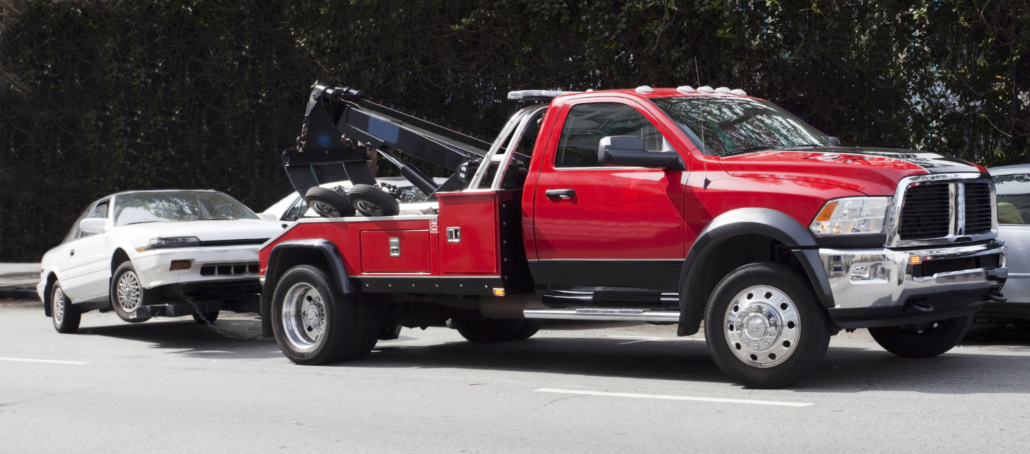
Tow truck businesses tow disabled vehicles. If you own a tow truck or a towing business, you need tow truck insurance. Examples of the types of businesses that need commercial tow truck insurance include:
- Roadside service providers
- Auto body shops
- Auto mechanical repair shops
- Auto salvage and auction haulers
- Auto Club contractors
Tow Truck Insurance Coverages
The most common types of towing Truck Insurance coverages include:
Liability insurance
Pays for injury that you or your driver cause to other people. Also covers damage to their property. There are two types of liability coverage: bodily injury liability and property damage liability coverage.
Medical Payments Insurance
If you or your passengers are hurt in accident, medical payment coverage pays for the medical bills.
Physical Damage Coverage
Pays for repairs to your tow truck caused by accident such as a collision with another vehicle or fallen tree branch. Physical damage coverage consists of three types of coverage: collision insurance, comprehensive insurance, and fire and theft.
Towing and Storage Protection
Tow truck insurance can cover more than just your tow truck. Many tow truck companies offer the following optional protections:
Garagekeepers Legal Liability Insurance
Optional coverage that provides coverage for any damages that are sustained by a vehicle in service while it is parked or being stored in a covered location. Although it is optional coverage, we always recommend this additional coverage.
On-Hook Towing Insurance
Optional coverage that is designed specially for tow truck operators. It pays for repairs or replacement costs if a vehicle you do not own is damaged while you are towing it. This includes damage caused by collision, theft, fire, explosion, or vandalism.
Tow Truck Insurance Cost
The cost of tow truck insurance varies. Similar to standard auto insurance, the cost of towing truck insurance depends on several factors such as location, driving history, and type of towing. When you insure your tow truck business through RCIB, you can be certain that you are getting the best coverage and the lowest rate.
RC Insurance Brokers compare rates from top insurance companies to help you find proper tow truck insurance that fits your needs. Request a tow truck insurance quote online by contacting us.
Janitorial Insurance

If you are a janitor regularly working on-site at customers’ offices and buildings, handling delicate and expensive items, and using heavy duty cleaning products, you may want to consider General Liability insurance for you and your business. Since even seemingly harmless situations can lead to lawsuits filed against you, We offer janitorial liability insurance to protect janitors from these risks. At RC Insurance Brokers we have many options to chose from.
RCIB, understands the risks that janitors face on a daily basis and customizes janitor insurance coverage to fit your business specific needs. Even liability claims that are baseless can drain a business’s assets, so it is in a small business’s best interests to plan ahead for litigious situations. We are in the business of encouraging courage and inspiring confidence in small business owners such as you.
If providing janitorial services is just one of many things that your small business offers, then you may also be interested in learning more about these other types of insurance that RCIB provides.
Mexico Auto Insurance

| Reasons to purchase Mexico Auto Insurance when driving to Mexico. | ||
| Vehicles Repaired in the US with US Hourly Labor Rates: We encourage vehicles to be repaired in the US (the customer does not have to fix their car in Mexico if they want their vehicle fixed in the US). Many of our insurance programs pay very high hourly US labor rates for repairs made in the US. |
||
| GMAC Approved Policies: If vehicles are financed with GMAC – many of our products fulfill the insurance requirements for GMAC.We offer Fixed Deductibles and $100,000 Combined Single Limit Liability. |
||
| Great 6 Month and Annual Rates: Our 6 Month and Annual policies do NOT limit how many days the vehicle can be in Mexico within the policy term. Our Annual policies cover all 365 days!Our 6 Month policies are perfect for customers who plan to be in Mexico for more than 30 days. Our 6 Month policy costs the same or less than other companies’ 30 day policy! |
||
| Plane Tickets Home & Medical Air Evacuation for Up to 4 People! Our travel assistance programs cover any 4 people in the travel group. If the insured vehicle is stolen or not drivable, the travel assistance will pay for 4 plane tickets back to the insured’s home in the US. |
||
| Instant Endorsements & Cancellation Processing with No Fees! We can assist agents with endorsing or canceling policies in a matter of minutes – and we do not charge agents for these changes. |
||
| Great Claims Service: Adventure plays a very active role in assisting with any claims your agency may encounter. If your agents ever hear of a claim, we ask that you call our office immediately. We will then monitor the claim for you – we try to get the claim off your back immediately! |
||
The Auto Carrier of the week
As Insurance Brokers, we have multiple carriers to choose from our various lines of Auto Insurance.
Not all carriers are the same, some carriers offer higher limits whereas, others prefer lower limits.
This week we will highlight some key features that Nationwide offers you as the consumer.
Protecting what’s most important
We’ve grown from a small mutual auto insurance company, owned by policyholders who spent their days farming in Ohio, to one of the largest insurance and financial services companies in the world.
Today we still answer to our members, but we protect more than just cars and Ohio farmers. We’re a Fortune 100 company that offers a full range of insurance and financial services across the country. Including car, motorcycle, homeowners, pet, farm, life and commercial insurance. As well as annuities, mutual funds, retirement plans and specialty health services.
We’ve served generations. Protecting what’s most important. Let us do the same for you.
What to know when purchasing Auto Insurance
Most states require bodily-injury liability insurance to cover medical treatment, rehabilitation and funeral costs incurred by your own passengers, other drivers, their passengers and even injured pedestrians. Other costs covered include lawyers’ fees and non-monetary losses related to pain and suffering.
State minimum-coverage limits are too low to protect the assets of most motorists. Unless your income and assets are minimal, buy at least $100,000 per person, $300,000 per accident.
Property damage:
Property-damage liability covers repair or replacement of other people’s cars and property. State minimum limits average about $15,000. With the average cost of a new car at $30,000, however, buy at least $35,000 in coverage.
Uninsured-motorist:
When a hit-and-run driver, or someone who’s inadequately insured, strikes your car, uninsured-motorist and underinsured-motorist coverage pays for the medical, rehabilitation, funeral, and pain-and-suffering costs of the victims in your car. This crucial coverage also insures your household members as pedestrians. Buy this coverage at the same limits as your bodily-injury liability coverage.
Collision:
Pays to repair or replace your car after an accident. If you have bought a new car with a loan, you’ll be required to buy this coverage.
Comprehensive:
Pays if your car or its contents are stolen, or if your car is damaged by fire, water or other perils. Lenders will also require this coverage.
For both, you’ll have to choose a deductible: a dollar amount you fork over to the repair shop before the insurer antes up. The higher the deductible you carry, the more you’ll save. Try to carry a deductible of at least $500 on each coverage.
For cars worth less than $5,000, comprehensive and collision probably aren’t worthwhile. Over time, the premiums you’ll fork over will probably exceed the payout, even if your car is totaled. Plus, in an accident that isn’t your fault, you can figure that the other driver’s insurance will cover your car. (To estimate your car’s market value, consult the Kelley Blue Book.)
You can probably do without these:
Medical payments
This coverage pays the deductibles and co-payments not covered by your health insurer, or the insurer of any of your passengers. It also covers some funeral and rehabilitation costs. It’s not useful unless you face very high health-insurance deductibles. If your state requires it, buy the minimum.
Towing and labor
This only pays if you can’t drive your car away from an accident. Members of auto clubs with such privileges don’t need this coverage.
Rental insurance
It costs only a few dollars per year, certainly a worthwhile expense if you travel and rent cars frequently. But spare the expense if you don’t rent cars often and can depend on another car in a pinch.
Glass breakage
Glass breakage coverage can add up to 20 percent to your comprehensive premium. When it’s not built into the premium, avoid it.
Here are some other money-saving tactics:
Combine coverage.
As with any product, it’s cheaper for insurance companies to sell more to one customer, so insurers often cut premiums up to 15 percent if you link auto and homeowners’ policies.
Sweat the small stuff.
Frequent claims are red flags for insurers; some won’t renew policyholders with more than two claims in three years. So try to carry more of the risk yourself by paying for repairs costing under $1,000 out of your own pocket. Or, if the damage is purely cosmetic, you could just ignore it.
Raise your deductible.
The average driver files a collision claim once every three years, and a comprehensive claim once every 10 years. Increasing a collision deductible on your auto policy from $200 to $500 can save up to 30 percent annually. Given the likelihood of filing a claim, you might come out ahead with the higher deductible.
Insurers have access to all sorts of personal information, including your motor vehicle record, credit record, and your history of claims with other insurers. It makes no sense to lie about your background. Mistakes can happen, however, and a glitch on your report could make you look like a worse risk than you are. If you haven’t done so in a few years, consider obtaining your credit report from all three credit reporting services.